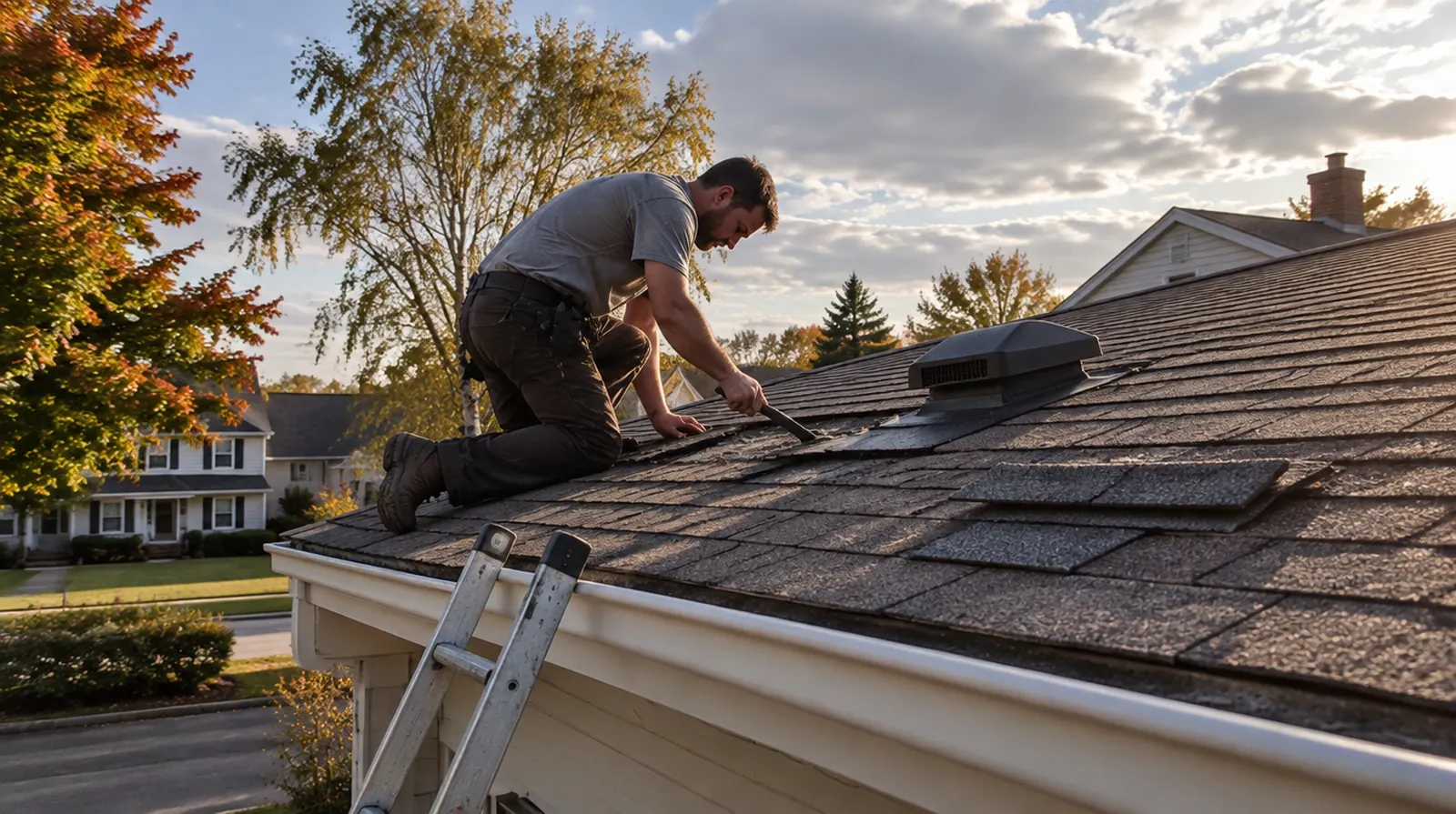
Common roof repair calls around Portage
Most repair visits we make in town fall into a few groups. Wind damage is the biggest, usually on the west and southwest slopes that face incoming storms. Tabs crease, lose their adhesive bond and eventually tear free, often taking ridge caps with them. Flashing is next: step flashing along a second-story wall or a garage that has rusted through, counter-flashing on a chimney that pulled loose as the mortar aged, or a valley where ice has chewed up the shingles over several winters.
Penetrations round out the list. Rubber collars on plumbing vents crack in the sun after a decade or so, bath fan hoods get knocked loose by ice, and skylights on older homes lose the seal around the curb. Each of these is a small fix if caught early and a much bigger one once water has soaked the deck underneath.
How our roof repair process works
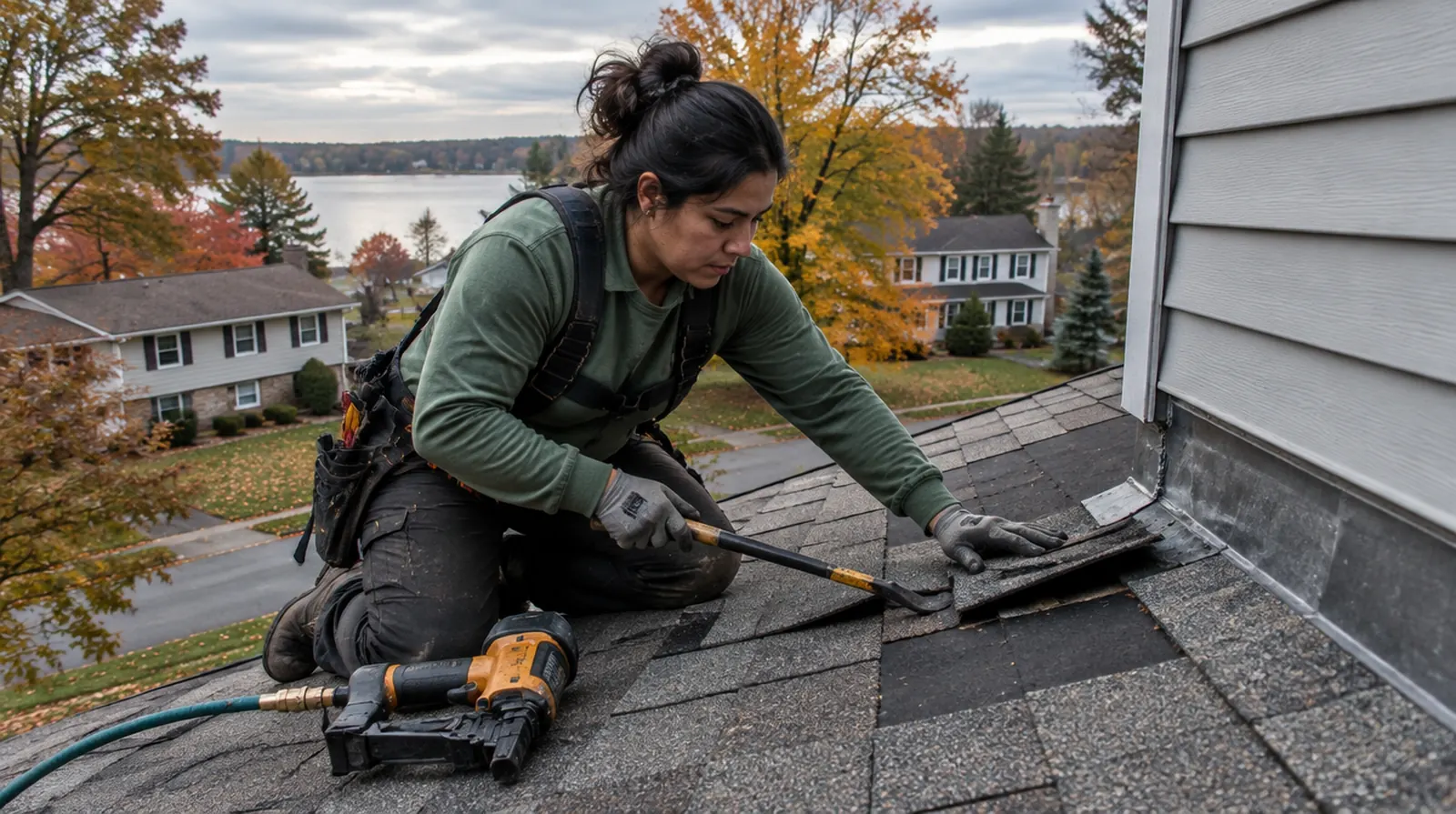
We start by asking what you have noticed and when: after a storm, during a thaw or only in heavy rain from one direction. That tells us where to look. On the roof we check the reported area plus everything uphill of it, and when we can, we go into the attic to match stains on the rafters with the damage outside.
Shingle repairs are made by lifting the surrounding courses, removing the damaged pieces and weaving new ones in so the nailing pattern stays intact. Each repaired area is sealed down so it does not lift in the next wind. Flashing is replaced with new metal rather than smeared with roofing cement, and pipe collars are swapped for new boots. If the plywood underneath is soft, we cut out the bad section and install new sheathing before covering it.
You get before and after photos and a short note on anything else we spotted, such as granule loss on a south slope or a second spot that is starting to lift.
Why roof repair should not wait in Michigan
Here the clock runs faster on small problems. An open nail hole in October lets meltwater in all winter. Freeze and thaw cycles widen gaps in flashing and crack brittle shingles around the damaged area. By spring, a repair that would have taken an hour can mean replacing sheathing and drywall. If you see shingle pieces on the lawn after a storm, it pays to have someone look before the snow flies.
What drives the cost of a roof repair
- Extent of damage. A few tabs on one slope is a short visit; a torn-up ridge line takes longer.
- Type of flashing. Chimney and sidewall flashing take more time than a field patch.
- Hidden deck damage. Rotted sheathing adds material and labor once it is uncovered.
- Roof pitch and height. Steep or two-story slopes need more safety setup.
- Matching. Older or discontinued shingles may require blending a wider area for a clean look.
Your written price covers the agreed scope. If we find rot once the shingles are up, we stop, show you, and price the extra before going further.
Repairing versus replacing the whole roof
A repair is the right move when the damage is localized and the rest of the shingles still lie flat and hold their granules. When the whole field is brittle, curled or patched in many spots, or when there are already two layers, money spent on repairs tends to chase one leak after another. In that case we will show you why and price a full roof replacement alongside the fix. If water is already reaching the inside, our targeted leak repair traces the path from the stain to the source before anything gets patched.
Repairs on lake homes and shaded lots
Homes on Austin Lake, Long Lake and the smaller lakes around town catch wind off the water and often sit under big oaks. That combination means more lifted tabs on the exposed side and more moss, debris and soft spots on the shaded side. When we repair these roofs we clear packed leaves from valleys, check that the shingles under the debris are still sound and recommend trimming branches that rub the roof.
Roof repair FAQs
Can you match the shingles already on my house?
We bring the closest match we can find. New shingles look a little brighter at first and blend in as they weather. On a front slope we will tell you up front how visible the patch may be.
Do you fix roofs in the winter?
Yes, when the roof is clear and safe to walk. Cold weather may call for a secure temporary seal with a final touch-up when temperatures rise.
How long does a typical repair take?
Many are finished in a few hours. Flashing rebuilds or sheathing replacement can take most of a day.
How do I set up a visit?
Call (269) 253-3042 and describe what you are seeing. Photos from the ground help us bring the right materials.
Need a roof repair this week?
Call (269) 253-3042 or send photos through the form for a free estimate.