Trees, lakes and a long leaf season
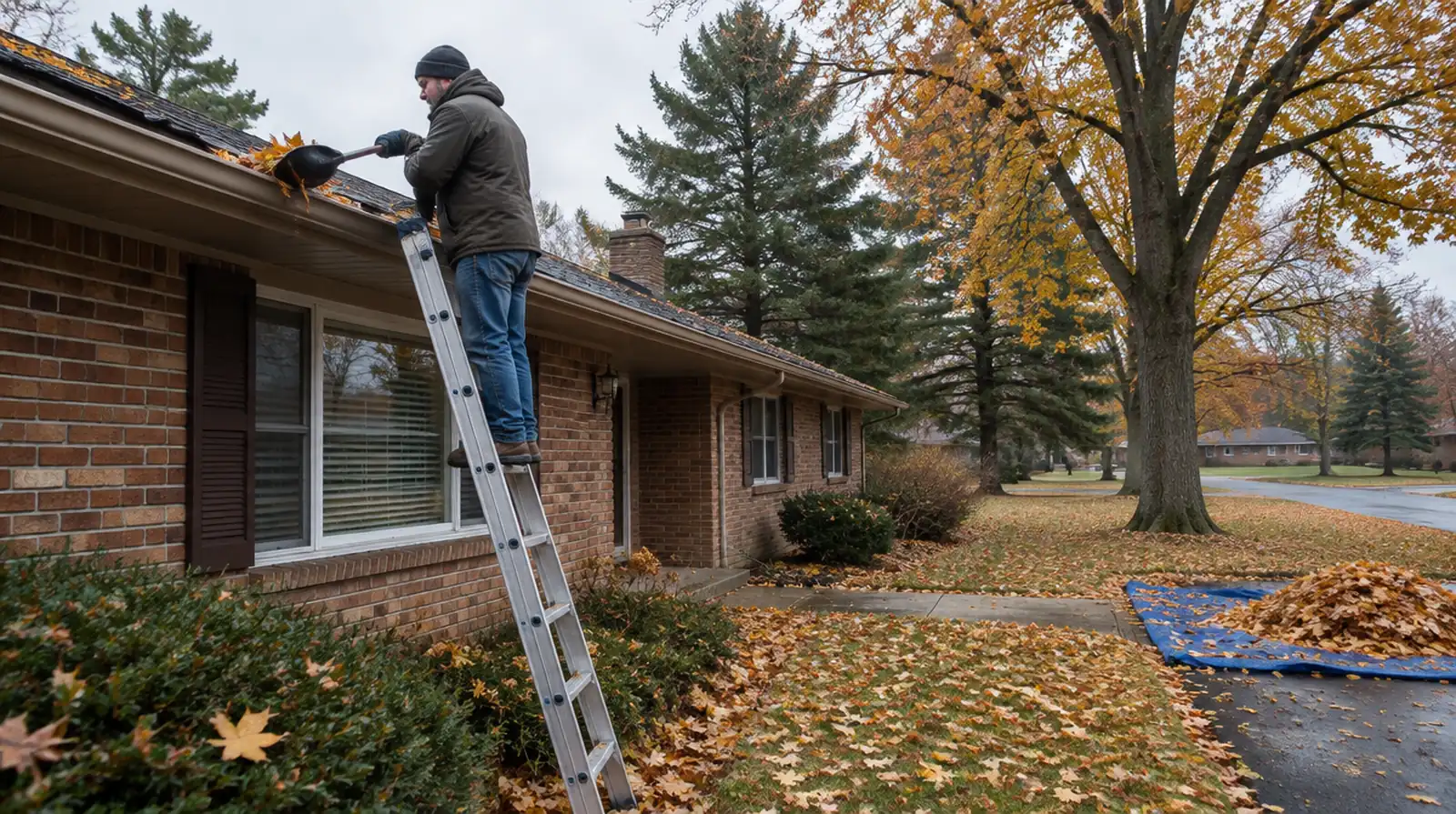
Portage neighborhoods were built around a string of lakes and wooded parcels: West Lake, Austin Lake, Long Lake, Gourdneck and others, plus the trails and wetlands near the Celery Flats. That makes for a pleasant place to live and a lot of gutter debris. Common culprits:
- Sugar, red and silver maples. Huge leaf drop in October, and seed "helicopters" that pile up and sprout in spring.
- Oaks. Leaves come down late, often after the first snow, and acorns jam downspout openings.
- White pines and spruces. Needles collect all year and mat into a thick, wet layer.
- Cottonwoods near the water. The fluff in early summer clings to wet debris and helps it form a solid plug.
Most Portage homes with trees overhead do best with a cleaning in late spring and another in late fall, after the oaks are done.
Why it matters before winter
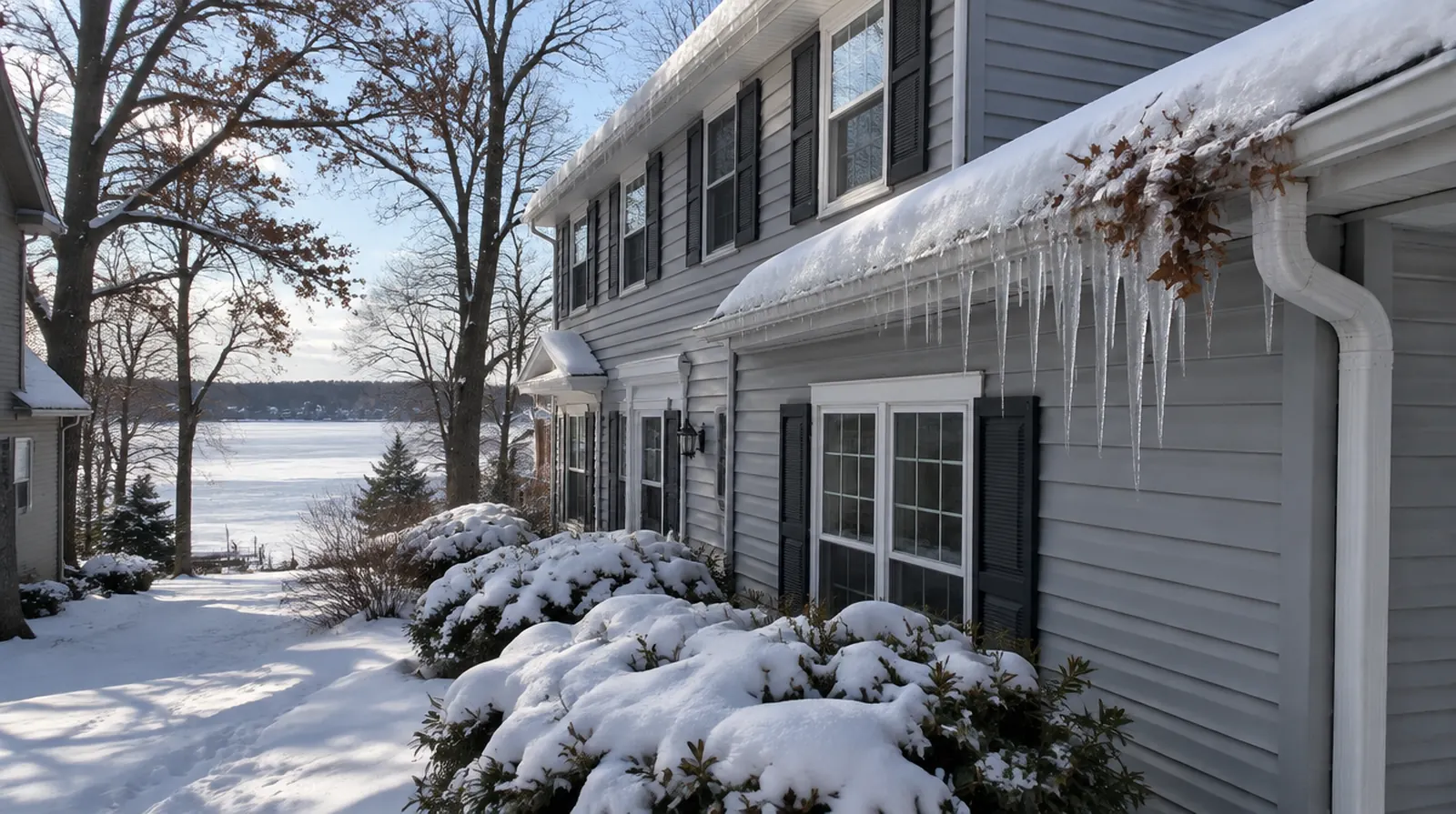
Southwest Michigan sits in the lake-effect snow belt off Lake Michigan, and Portage gets plenty of snow plus repeated freeze and thaw cycles. When gutters are full of leaves, snowmelt from the warm roof has nowhere to go. It refreezes at the cold eave, builds a ridge of ice and backs water up under the shingles. That is how ice dams cause stained ceilings, wet insulation and peeling paint inside, even on a roof that is otherwise in good shape.
Heavy ice in a clogged gutter is also hard on the gutter itself. The added weight pulls hangers out of the fascia and bends sections out of pitch, so next spring water runs the wrong way.
What we do on every visit
- Remove debris by hand from every run, bag it and take it with us or leave it for your yard waste pickup.
- Flush all downspouts and clear clogs with a snake if water backs up.
- Check that extensions carry water away from the foundation, which matters a lot for basements.
- Look over hangers, seams and end caps for leaks and loose fasteners.
- Point out roof issues we can see from the edge, such as lifted shingles or worn flashing.
Houses we work on
Portage has a lot of 1960s and 1970s brick ranches and tri-levels in its older areas, and many two-story colonials and newer homes in subdivisions built since the 1990s. Ranches are easy to reach but often have long single runs with only two downspouts, so one clog backs up the whole side. Two-story homes and those with walk-out basements facing a lake need taller ladders and careful setup on sloped yards. Either way, we use ladder standoffs to keep weight off the gutter and protect the shingles.
Basements and drainage
Many Portage homes have full basements, and a lot of wet basement calls start at the gutters. An overflowing gutter or a downspout that empties right at the wall saturates the soil next to the foundation. In spring, when the ground is still frozen a few inches down, that water has nowhere to go but in. Keeping gutters clear and extending downspouts four to six feet from the house is one of the cheapest ways to keep a basement dry.
Signs you are overdue
- Water pouring over the front of the gutter in rain.
- Seedlings growing along the roof edge.
- Sagging sections or gutters separating at corners.
- Icicles that form along one stretch every winter.
- Damp spots in the basement on the same wall after storms.
Questions we get
Do gutter guards stop ice dams? No. Guards cut down on debris, but ice dams come from heat escaping the attic and melting snow. Clean gutters and good attic ventilation work together.
When should I book? Late October and November fill up quickly. Booking the fall cleaning early in the season helps make sure it gets done before the snow.
Beyond cleaning
If gutters are bent from past ice or simply too small for the roof, cleaning only goes so far. Our gutter installation crew can replace them with properly sized seamless gutters. If you have had ice dam leaks, book a roof inspection to check for damaged decking and insulation problems. We also clean gutters in Kalamazoo, Texas Township, Pavilion Township and Vicksburg.
Schedule gutter cleaning
Call (269) 253-3042 to book a cleaning before the snow flies.