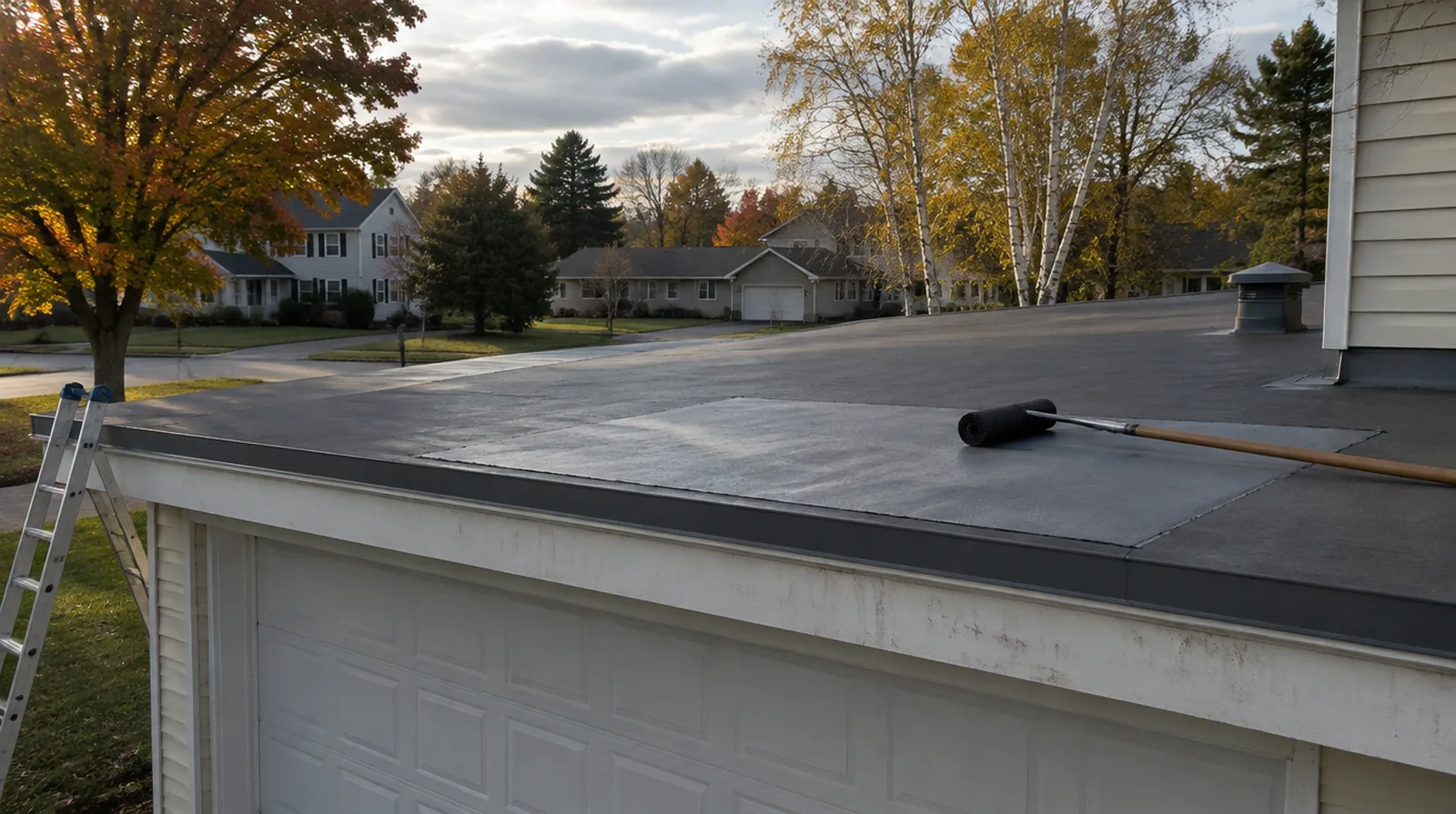
Flat roof repair on Portage homes
Most homes in town are pitched, but plenty have at least one nearly flat section. Ranches often have a low porch roof tied into the main eave. Split-levels and colonials may have a flat roof over a family room or a breezeway to the garage. Some lake houses have low sections from additions built over the years. Small commercial-style buildings and detached garages around town also use membranes. All of these depend on seams and drainage, not steep slope, to keep water out.
When a flat roof needs repair
- Water stands on the roof for more than a day or two after rain or melt.
- Seams have opened, or the membrane is blistered, cracked or wrinkled.
- The edge metal or flashing at the wall has pulled loose.
- Ceiling stains appear in the room below the low section.
- The surface feels soft or spongy when you walk on it.
Our flat roof repair process
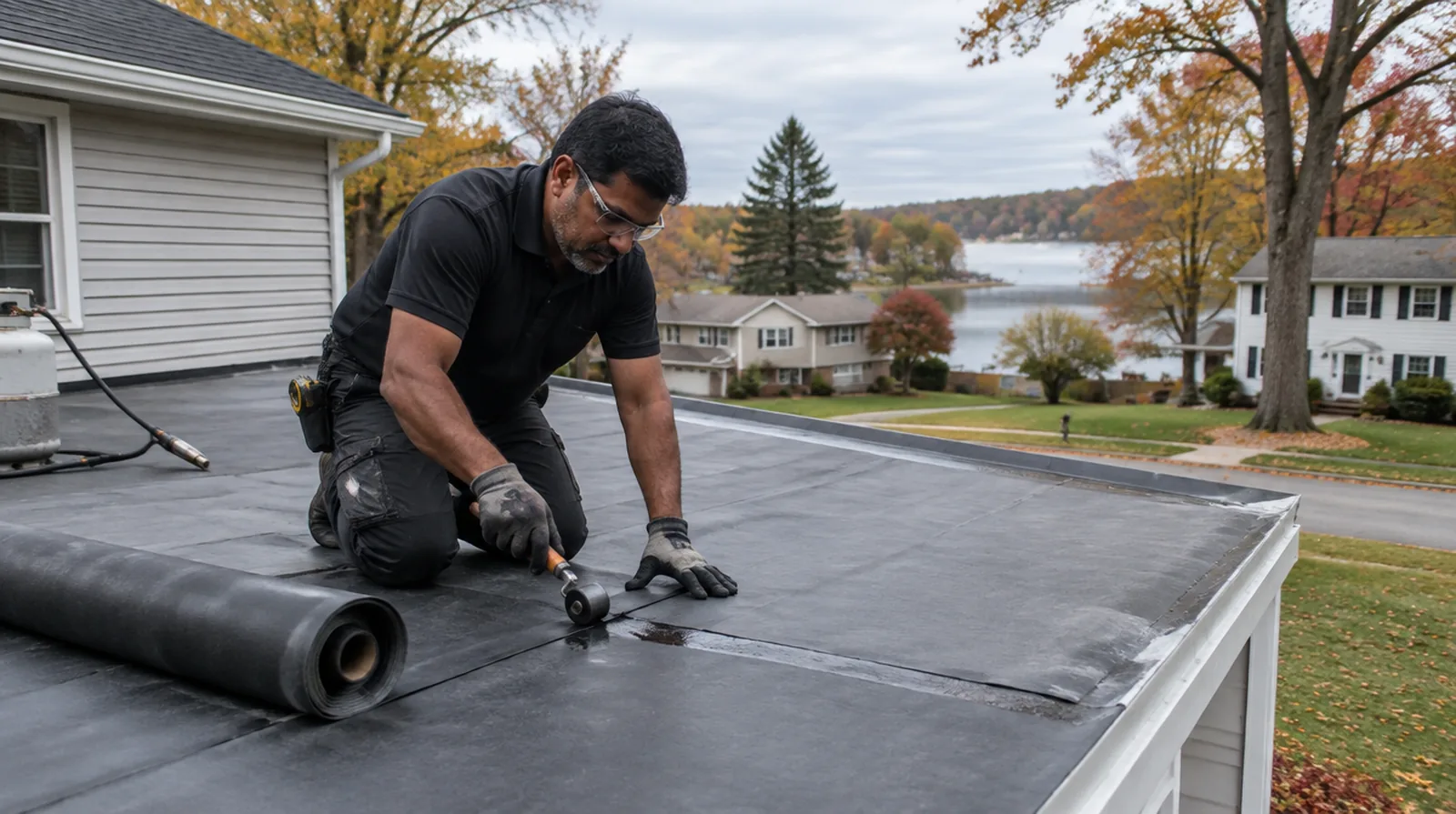
We begin by clearing the surface and checking where water is collecting. Ponding areas, drain openings and the edges where the low roof meets a wall or a shingled slope are the most common entry points. We probe for wet insulation and soft decking, since water can travel under a membrane before it shows up inside.
Once we find the entry point, the damaged membrane is cut back to sound material and the area is dried. Seams are cleaned and rebonded or covered with a new patch, and flashing at walls and curbs is redone with fresh material. If the deck under the patch is rotted, we replace that section. Drains and scuppers are cleared and checked so meltwater can actually leave the roof.
Why flat roofs struggle in this climate
Lake-effect snow piles up on low roofs and does not slide off. As it melts, the water has nowhere to go if the drain is blocked by ice or leaves, so it sits against the seams for days. Freeze and thaw then work on any weak spot, opening small gaps wider each cycle. In summer, the sun beats on dark membranes and dries out older materials. The transitions where a flat roof meets a pitched one are especially vulnerable, because meltwater from the upper slope lands right on that joint.
What affects flat roof repair cost
- Membrane type. EPDM, modified bitumen and older built-up roofs are repaired differently.
- Size of the damaged area. A single seam is quicker than a large blistered section.
- Wet insulation or deck. Anything saturated underneath has to come out.
- Flashing work. Wall, curb and edge details add labor.
Repairing a section versus recovering the whole roof
When the membrane is mostly sound and the problem is a seam or drain, a targeted repair makes the most sense. When the surface is cracked and blistered across the whole roof, or several patches have failed, a new membrane is usually the better long-term choice. We look at the age of the roof, how widespread the damage is and how much wet material we find before recommending either path.
Keeping a flat roof healthy through winter
A little upkeep goes a long way on low sections. Clear leaves from drains and scuppers each fall, keep tree limbs trimmed back and avoid chipping ice off the surface with shovels or picks. If snow builds very deep, a roof rake used from the ground can lighten the load without damaging the membrane. A quick look after the spring thaw helps catch open seams before summer storms arrive.
Flat roof repair FAQs
Can you repair a flat roof in winter?
Some repairs can be made on dry, mild days. Others are best done with a temporary seal until warmer weather allows the materials to bond properly.
Is a coating enough to fix a leak?
Coatings can extend the life of a sound roof but do not fix a failed seam or wet insulation underneath.
Do you work on garage and porch roofs?
Yes, including small low-slope sections attached to pitched roofs.
How do I get started?
Call (269) 253-3042 to schedule a visit.
Have a low-slope leak?
Call (269) 253-3042 for a free flat roof repair look.